
Fixed vs. Variable Costs in Logistics is one of those financial balancing acts that quietly determines whether your growth fuels profit or drains it.
Every founder dreams of scaling their brand. However, growth doesn’t just multiply revenue; it also increases logistics complexity and cost. And if you’re not paying attention to how those costs behave as you scale, you could be building a bigger business on shaky financial ground.
Here’s the truth: fixed costs, like warehouse rent, full-time staff, and equipment leases, stay stubbornly high even when orders dip. Meanwhile, variable costs, like packaging, labour, and carrier fees, move with your sales volume. The wrong mix can turn your fulfilment operation into a cash-hungry machine that eats away at your margins month after month.
Too many founders only discover this when it’s too late, when what once felt like a smart investment starts to feel like a financial anchor.
In this blog, we’ll unpack 6 critical truths about fixed vs. variable costs in logistics, why getting this balance right is mission-critical for scaling sustainably, and how flexible, scalable fulfilment solutions like OFEX can help you protect cash flow, maintain agility, and grow without the financial strain.
1. Fixed Costs Don’t Flex With Your Sales
One of the harsh realities of logistics is that fixed costs stay the same no matter how much you sell.
Examples of Fixed Costs in Logistics:
- Warehouse leases or property rent
- Utilities like heating, electricity, water
- Staff salaries for warehouse supervisors and admin
- Equipment leases (forklifts, pallet racks, conveyor belts)
- Insurance and compliance fees
If you commit to a 20,000-square-foot warehouse because you hope sales will double in 12 months, you’re locked into that lease whether orders skyrocket or stagnate.
This is the first trap many founders fall into confusing “capacity” with “necessity.” Scaling logistics is not about owning more space but about ensuring you can flex up and down without being crushed by overhead.
Lesson: If you overcommit to fixed costs too early, you’ll burn cash in slow months and risk scaling failure.
2. Variable Costs Are Easier to Manage but Can Spiral Out of Control
While variable fulfilment costs adjust with your order volume, they can sneak up and eat into your margins if unmanaged.
Examples of Variable Costs:
- Packaging supplies (boxes, bubble wrap, branded inserts)
- Labour (seasonal workers, temp staff for peak periods)
- Carrier fees (domestic and international shipping)
- Payment processing fees
- Return handling
On paper, variable costs seem “safer” because they scale with revenue. But here’s the kicker: many founders don’t negotiate bulk rates, don’t optimise packaging, or don’t use tech integrations that reduce handling. As a result, these costs grow faster than sales.
Lesson: Variable costs feel flexible, but without proper fulfilment cost management, they become silent profit killers.
3. Over-Reliance on Fixed Costs Shrinks Your Agility
Here’s a scenario: You’ve leased a large warehouse, hired full-time staff, and invested in equipment. Then a sudden market shift, like new competition or an economic downturn, causes your sales to dip 30%.
Your costs? Still the same.
This lack of agility is why many scaling businesses collapse under their own infrastructure. By contrast, a 3PL cost savings model transforms fixed costs into variable ones. Instead of paying for idle racks and unused staff, you pay only for the storage and fulfilment you actually use.
Lesson: Over-investing in fixed costs ties your hands and prevents you from adapting quickly to market changes.
4. The True Cost of “Owning Control”
Many founders cling to in-house logistics because they want control. Owning your warehouse and team feels safe until you calculate the hidden costs:
- Recruitment and HR headaches
- Training and high staff turnover
- Compliance with health, safety, and labour regulations
- Maintenance of equipment and property
- Seasonal overstaffing and understaffing cycles
In reality, that “control” often comes at the cost of time, money, and focus. What looks like a long-term investment in independence often becomes a long-term liability.
Lesson: The illusion of control from fixed infrastructure often costs more than it’s worth.
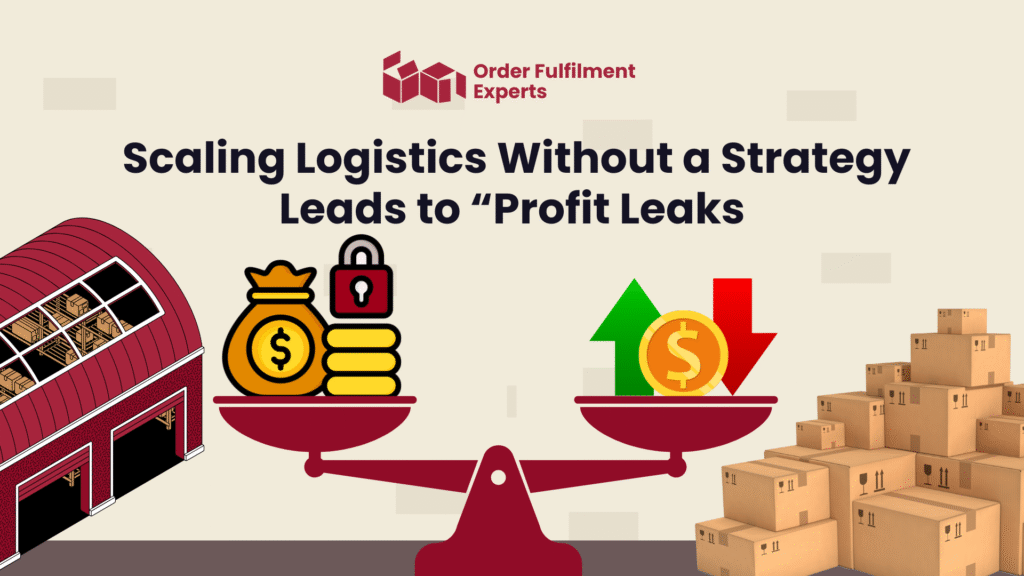
5. Scaling Logistics Without a Strategy Leads to “Profit Leaks”
When you don’t understand the balance of fixed vs. variable costs in logistics, your business develops “profit leaks.”
Common Examples:
- Paying for excess warehouse space you don’t use year-round.
- Over-hiring staff during peak seasons, then letting them go.
- Stockouts caused by under-investment in staff or systems.
- Poor carrier negotiations leading to inflated shipping rates.
- Hidden warehouse fixed costs like utilities that rise with no added efficiency.
Every founder wants growth, but if your cost structure isn’t designed to flex with demand, your growth will come at the expense of profitability.
Lesson: Scaling logistics without a smart cost structure is like trying to fill a bucket with holes, you’ll work harder, but never hold onto profit.
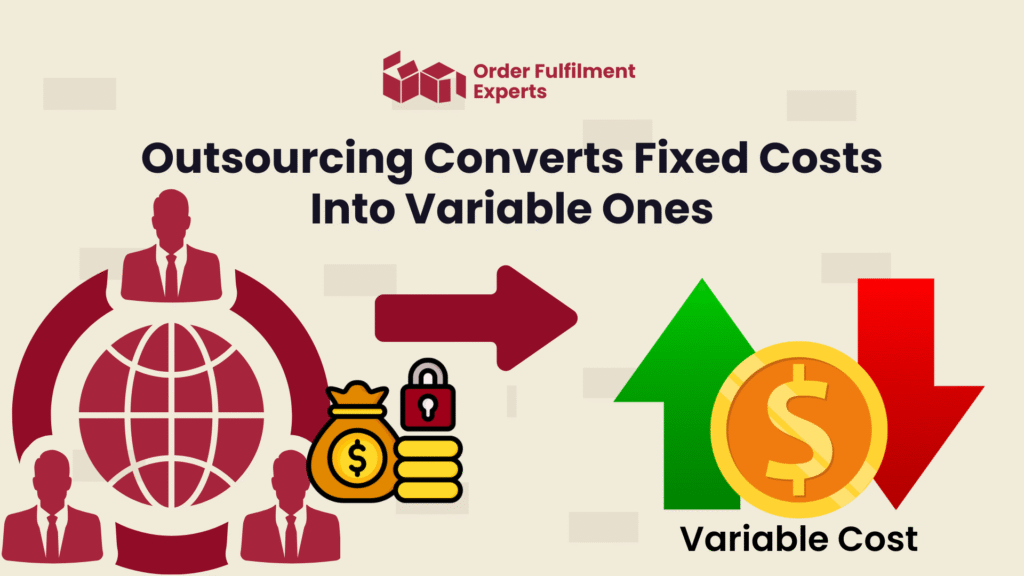
6. Outsourcing Converts Fixed Costs Into Variable Ones
Here’s the most important hard truth: the smartest way to escape the trap of heavy fixed costs is to outsource fulfilment to a 3PL like OFEX.
By doing so, you:
- Eliminate the risk of long-term warehouse leases.
- Avoid payroll bloat from full-time staff.
- Pay only for the space, services, and labour you need.
- Leverage advanced technology without footing the software bill.
- Scale seamlessly during seasonal peaks or sudden growth.
This model transforms your logistics from a fixed liability into a scalable variable cost. That means you can focus on sales, customer experience, and product innovation while your fulfilment flexes with demand.
Lesson: Partnering with a fulfilment provider makes your logistics cost structure growth-ready and frees up capital for true scaling.
Don’t Let Logistics Costs Choke Your Growth
Founders often obsess over marketing, product development, and customer acquisition, but forget that logistics costs can silently erode profitability.
The 6 hard truths about fixed vs. variable costs in logistics are clear:
- Fixed costs don’t flex with sales.
- Variable costs are flexible but must be controlled.
- Over-reliance on fixed costs kills agility.
- Owning “control” comes with hidden costs.
- Poor strategies create profit leaks.
- Outsourcing turns fixed liabilities into scalable solutions.
If you’re serious about scaling logistics, your goal isn’t to build the biggest warehouse or hire the largest team, it’s to build a cost structure that moves with you, not against you.
Here’s the brutal reality: many founders fail not because their product isn’t great, but because their logistics cost structure couldn’t keep up. Fixed costs drained them in slow seasons, variable costs spiked in busy ones, and they were trapped in a cycle of firefighting instead of scaling.
You don’t have to fall into that trap. With Order Fulfilment Experts (OFEX), you get scalable fulfilment solutions that let you flex with demand, reduce overhead, and keep customers happy without draining your margins.
Ready to scale smart?
Visit Order Fulfilment Experts today to book a strategy call and see how we can help you convert costly logistics headaches into smooth, scalable growth.
And don’t forget to connect with us for more insights and practical tips:
- Facebook: OFEX UK
- Instagram: @ofex_uk
- LinkedIn: Order Fulfilment Experts
Scale without breaking the bank. Escape the logistics trap with OFEX.