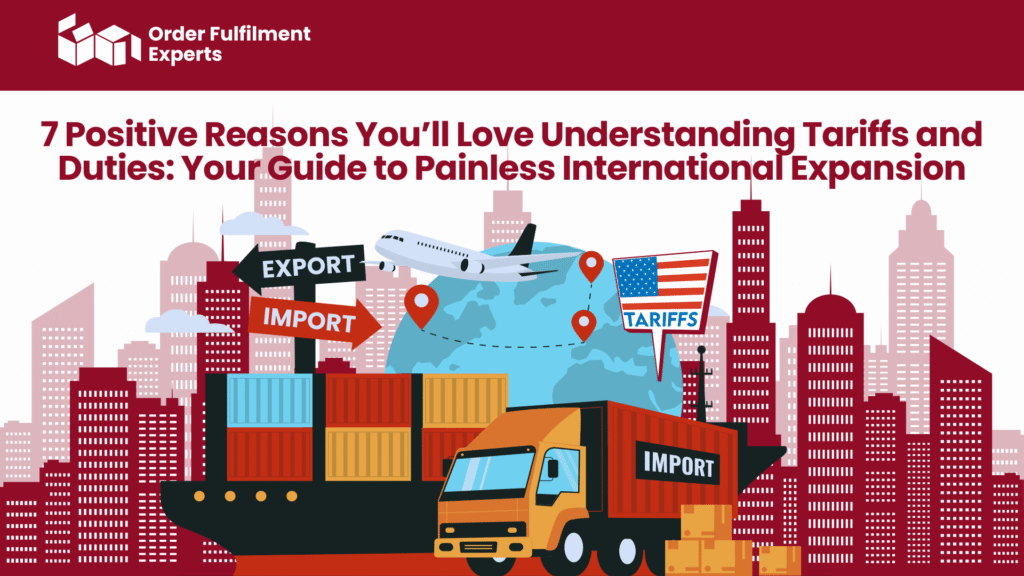
Understanding tariffs and duties, international expansion, and tariffs and duties guide are key phrases every business owner venturing abroad should know, and we’re diving straight in. If you’re a business owner looking to grow overseas, this article gives you a detailed, practical and friendly walk-through of tariffs and duties, what they mean for your business, and how you can partner with expert fulfilment partners like Order Fulfilment Experts to make your international expansion less painful and more profitable.
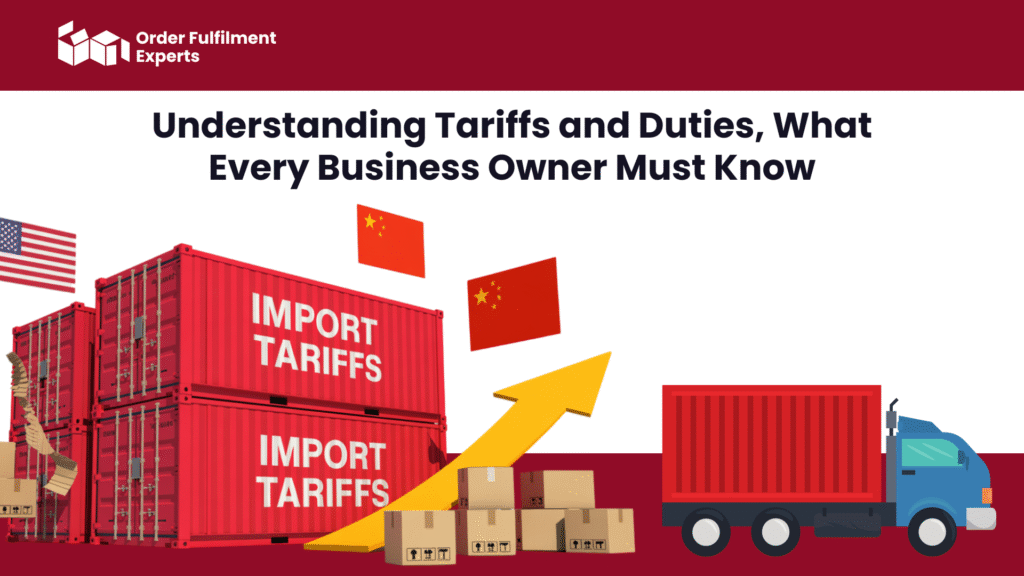
Understanding Tariffs and Duties: What Every Business Owner Must Know
When you begin planning for international trade and cross-border shipping, understanding tariffs and duties becomes more than just a compliance task; it becomes a strategic asset. In simplest terms, a tariff (or duty) is a tax or charge imposed by a government on goods imported into its country.
What are Tariffs?
A tariff is typically a tax on imported goods. For example, a country might impose a 10% tariff on all electronics imported from a specific region. That increases the landed cost of your goods. Tariffs serve multiple purposes: protecting domestic industry, generating revenue, and influencing trade policy.
What are Duties?
“Duties” is a broader term. It includes tariffs but also covers import duties, excise duties, anti-dumping duties, etc. For a business, the key takeaway is: when you import goods, you may be liable to pay duties based on value, quantity, product classification, origin, and trade agreements.
Tariffs vs Duties – What’s the difference?
- Tariffs are traditionally used to restrict or control imports by raising costs.
- Duties might include tariffs, but also other forms of import tax.
- One practical tip: always classify your product under a Harmonised System (HS) code, the code determines what tariff/duty applies.
Why Understanding Tariffs and Duties Matters for International Expansion
When you’re looking at international expansion, tariffs and duties impact your bottom line, logistics, pricing strategy, and competitive positioning.
- They affect your cost structure. If you don’t account for import tariffs and duties, your landed cost may be higher than you think.
- They influence market competitiveness. If your competitor avoids high duties via alternate sourcing or free-trade agreement advantages, you may be at a disadvantage.
- They tie into compliance risk. Misclassifying a product or failing to account for duties can lead to penalties, delays, or missed shipments.
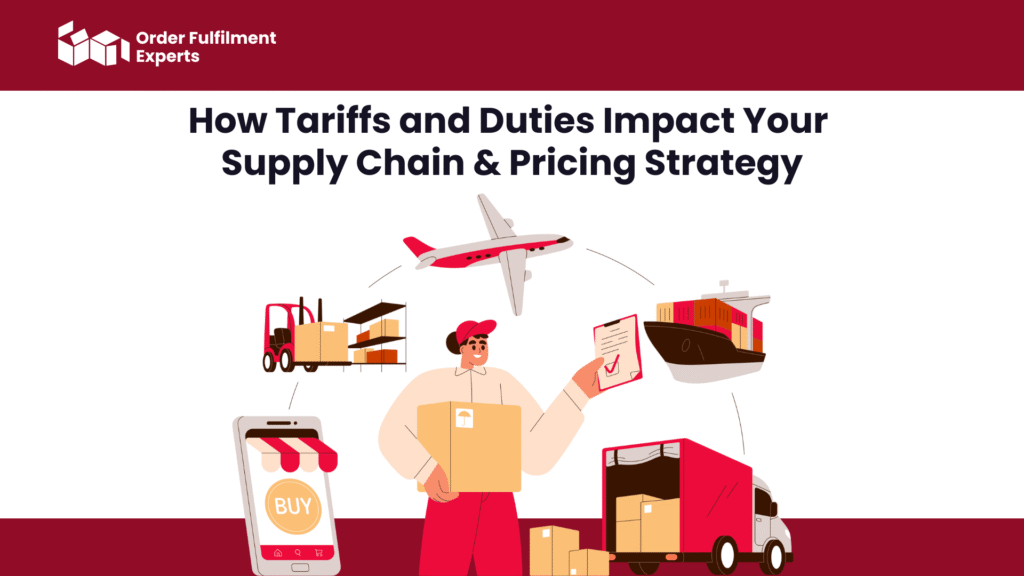
How Tariffs and Duties Impact Your Supply Chain & Pricing Strategy
When expanding internationally, understanding how tariffs and duties influence your supply chain and pricing strategy is critical.
Calculating the Landed Cost
Your landed cost should include: product cost + shipping + insurance + import duties/tariffs + local taxes and fees. Without factoring in the tariffs and duties component correctly, you risk underestimating your costs.
Sourcing Strategy and Tariff Avoidance
- One way to reduce tariffs is to source goods from a country that benefits from a free-trade agreement with your target market. For example, if your target market has a duty-free status for goods from a certain region.
- Another strategy: classify your products carefully under the HS code and ensure you use correct origin declarations; sometimes you can benefit from lower duty rates.
- Diversify suppliers and production locations. If tariffs increase in one country, you have alternatives.
Pricing Strategy Implications
When duties or tariffs increase, you must decide: absorb the cost, pass it on to the customer, or adjust your product/market model. If you don’t anticipate the duty cost, your profit margin may erode. Use tariffs and duties as a factor in your pricing model.
Logistics & Fulfilment Considerations
- Customs clearance: tariffs and duties must be paid at customs; delays in paying or incorrect paperwork can hold up your goods.
- Storage and warehousing: Bonded warehouses or free-trade zones can defer duty payment until goods leave the facility, offering cash-flow advantages.
- Fulfilment partner capabilities: If you partner with an experienced fulfilment provider, they’ll often handle customs, duties, classification, and compliance, reducing your administrative burden.
The Big Picture: International Expansion & Tariff-Driven Strategy
Let’s zoom out and consider how understanding tariffs and duties fits into your overall international expansion plan.
Tariffs as a Catalyst for Expansion
Interestingly, tariffs don’t just pose a challenge; they can drive businesses to explore new markets or shift manufacturing locations. For instance, if your domestic market faces rising import tariffs, you might manufacture overseas or sell directly into other regions.
Risk Management & Trade Policy Volatility
Tariff regimes can change, political shifts, trade agreements, or retaliation can all cause sudden duty increases. For example, one publication highlighted potential tariff increases of 10-60% in 2025 and urged businesses to review HS codes and sourcing. So you need to plan for uncertainty.
Market Selection & Entry Strategy
When planning international expansion:
- Understand the duty/tariff regime in your target market. Use resources like the tariff finder tool to check rates.
- Consider local compliance, documentation, origin rules, and HS codes. A misstep here can cost you time and money.
- Leverage free trade agreements where available to reduce or eliminate duties.
Partnering with Order Fulfilment Experts to Navigate Tariffs & Duties
This is where a partner like Order Fulfilment Experts (OFEX) becomes invaluable. They can:
- Handle customs classification, documentation, and duty payments on your behalf.
- Provide insight into landed cost modelling, including tariffs and duties, so you can price your product with confidence.
- Offer fulfilment infrastructure (warehousing, shipping, local distribution) that is built with international trade in mind, saving you from setting it up from scratch.
- Mitigate risk by staying up-to-date with trade policy changes, ensuring your supply chain adapts.
Practical Steps to Make Tariffs & Duties Work for You
Let’s get actionable. Below are practical steps you can implement to keep tariffs and duties from derailing your international expansion.
Step 1: Classify Your Products with HS Codes
Get clear on your product’s HS code (Harmonised System). The code determines tariff/duty rates based on product type and origin. Work with customs brokers or your fulfilment partner to ensure correct classification.
Step 2: Define the Origin and Check for Free Trade Agreements
Origin matters. If your goods originate (or are substantially transformed) in a country covered by a free-trade agreement with your target market, you might be eligible for reduced duties. Compile a list of your key sourcing countries and target export markets; map out the duty landscape for each.
Step 3: Build the “Total Landed Cost” Model
Include: purchase price + freight + insurance + tariffs/duties + local taxes + fulfilment fees. Use this to decide your pricing, margin, and whether expansion into that market makes sense. Watch for duty increases or currency changes which can disrupt your model.
Step 4: Leverage Fulfilment Expertise
Engage a fulfilment specialist like OFEX who can:
- Interface with customs.
- Provide warehousing in strategic markets.
- Help with shipping and delivery from your international hub.
- Offer clarity on impending duty or tariff changes so you stay ahead of the curve.
Step 5: Monitor & Adapt
Tariff regimes change. You need to keep monitoring:
- Government trade announcements.
- Supplier cost changes due to new tariffs.
- Geopolitical events that trigger duty hikes.
- Logistics lead times, which may lengthen if customs become heavier.
Step 6: Communicate Clearly with Your Customer
If duties or tariffs increase your cost, decide whether to absorb, share, or pass on to customers. Transparent communication helps maintain trust. Also, clearly state delivery terms, import responsibility (Incoterms), and duty expectations.
Common Pitfalls in Tariffs and Duties And How to Avoid Them
Even experienced exporters can fall into traps. Being aware of common pitfalls makes your international expansion smoother.
Mistake 1: Underestimating Duty Costs
Many businesses only account for shipping and freight, forgetting duties. The result: margin erosion and surprise cost overruns. Avoid by modelling landed cost fully.
Mistake 2: Incorrect HS Code Classification
An HS code misclassification can mean higher duties, penalties, or customs hold-up. Work with experts and ensure correct classification from the start.
Mistake 3: Ignoring Origin Rules & Free Trade Agreements
Just sourcing from a country isn’t enough; you need to check whether your product qualifies for preferential duty treatment under origin rules. Always check if your goods comply with the rules.
Mistake 4: Being Passive About Duty Changes
If you wait until a tariff increase hits, it’s too late. Be proactive. Use fulfilment partners that monitor trade policy and alert you to changes.
Mistake 5: Poor Fulfilment & Customs Support
International orders require fulfilment systems that manage customs paperwork, duty payments, and local delivery. If your fulfilment partner lacks this, you’ll face delays, costs, and customer dissatisfaction.
Why Partnering with Order Fulfilment Experts Makes Sense
If you’re planning international expansion, here are key reasons why partnering with Order Fulfilment Experts (OFEX) is a strategic move.
Expertise in Compliance & Documentation
OFEX understands tariffs, duties, HS codes, origin classification, customs entries, and can manage or advise on all of it for you, reducing your administrative burden.
Fulfilment Infrastructure in International Markets
They provide warehousing and fulfilment services in markets that matter, meaning you get better delivery times, efficient shipping, and localised fulfilment, thereby reducing some duty/tariff exposures and improving customer satisfaction.
Cost-Efficiency & Scalability
Expanding internationally often means setting up operations in new countries, which is costly and risky. A fulfilment partner allows you to scale without the upfront hassle, offering you access to their existing infrastructure, network and customs experience.
Strategic Advice on Sourcing & Route-to-Market
OFEX can support your decisions on where to source, how to structure your logistics so tariffs/duties are optimised, and how to keep your landed cost competitive while maintaining quality.
Focus on What You Do Best
Instead of wrestling with customs paperwork and duty uncertainty, you can focus on product, marketing, and growth, and leave the complex fulfilment, shipping, tariff/duty issues to the partner who lives and breathes those challenges every day.
Make Tariffs and Duties Work for Your Growth
International expansion doesn’t need to be scary. By understanding tariffs and duties, building cost models, choosing the right sourcing and fulfilment strategy, and partnering with the right experts, you can turn what seems like a barrier into a competitive advantage.
Remember:
- Tariffs and duties = components of cost & risk.
- Accurate classification and origin matter.
- Fulfilment & logistics are key to international success.
- A strategic partner like OFEX makes the difference between stumbling through international growth and expanding confidently.
Take-Action Now
Ready to explore global markets with certainty? Reach out to Order Fulfilment Experts (OFEX) today to talk through your tariff and duty strategy, your fulfilment infrastructure, and your international growth plan. Visit our website and book an appointment at https://orderfulfilmentexperts.co.uk/.
Follow us on social media for the latest updates and expert insights:
- Facebook: OFEX UK
- Instagram: @ofex_uk
- LinkedIn: Order Fulfilment Experts
Here’s to your smooth, informed, and profitable international expansion!